


Jerry John Rawlings House: Memory, unity, and the moral burden of the NDC – Prof. Michael Kpessa-Whyte writes
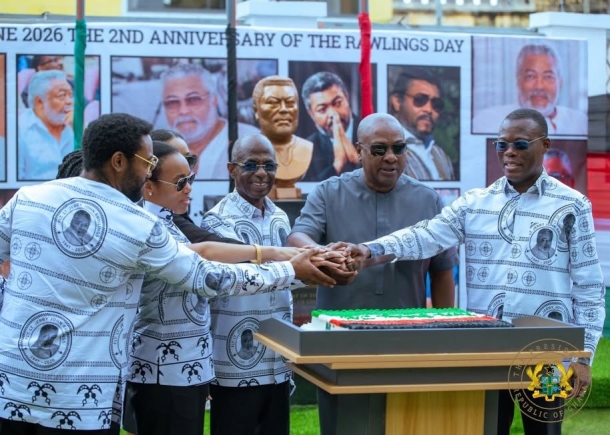
The decision by the National Democratic Congress to name its national headquarters the Jerry John Rawlings House is more than an act of remembrance.
It is a profound statement of identity, gratitude, continuity, and unity. It is a symbolic return to the moral origins of a party whose birth was shaped not only by political organization, but also by a historic national demand for accountability, probity, justice, discipline, and social purpose.
Buildings are never neutral. They carry memory. They announce values. They teach generations what an institution considers sacred. To name the headquarters of the NDC after Flt. Lt. Jerry John Rawlings is therefore not merely to honour a founder. It is to place before every party officer, government appointee, parliamentary candidate, branch executive, constituency organizer, and ordinary member a permanent reminder of the moral fire from which the party emerged.
That fire was Rawlings
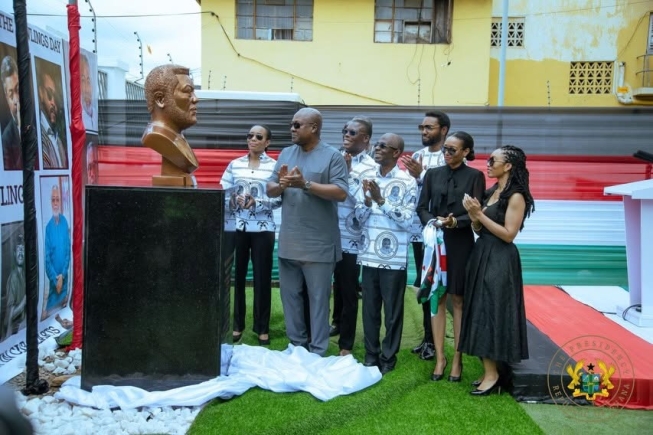
The significance of the occasion was captured most powerfully by President John Dramani Mahama, who described the day as one of remembrance, gratitude, and renewal. In doing so, he gave the event its proper meaning. This was not simply a ceremony to rename a building or unveil a bust. It was an invitation to the NDC family to reflect on its journey, honour those whose sacrifices shaped its political tradition, and recommit itself to the ideals that gave the party life and moral authority.
That framing matters. Political memory is not useful when it becomes mere nostalgia. It is useful when it becomes a guide to conduct. President Mahama was therefore right to insist that the ceremony was about preserving history, celebrating leadership, and passing enduring values to future generations. His remarks gave the occasion both dignity and direction. They reminded the party that institutions endure not only because they have offices, constitutions, executives, and structures, but because they are animated by values larger than the ambitions of individuals.
Rawlings was not perfect, and no honest reading of history should pretend that he was. He was human, complex, forceful, controversial, charismatic, impatient with hypocrisy, and often uncompromising in his understanding of public duty. But the greatness of a historical figure is not measured by the absence of controversy. It is measured by the depth of the questions he forced a nation to confront, the courage with which he spoke to the anxieties of ordinary people, and the enduring consequences of his actions.
By that measure, Jerry John Rawlings remains one of the most consequential figures in Ghana’s political history.
At a time when many Ghanaians felt abandoned by the state, mocked by privilege, and suffocated by corruption, Rawlings emerged as the voice of public anger. He represented the cry of the market woman whose labour produced no dignity, the worker whose salary had been eroded by economic decay, the soldier whose uniform had become a symbol of sacrifice without reward, the youth whose future had been undermined by mismanagement, and the ordinary citizen who watched a privileged few behave as if Ghana belonged to them alone.
It is easy, from the comfort of the present, to speak of the Rawlings moment only in the language of military intervention. But that would be incomplete. To understand Rawlings, one must understand the Ghana into which he erupted. It was a Ghana tired of excuses, wounded by economic decline, weakened by institutional decay, and angered by the normalization of impunity. Public office had, in too many cases, become a private harvest. Public resources had become objects of elite capture. The moral distance between rulers and the ruled had widened dangerously.
Ghana travel guide
Rawlings did not invent the anger of the people. He gave it language. He did not manufacture national frustration. He embodied it. He did not create the demand for accountability. He dramatized it with such force that the political class could no longer ignore it.
This is why his memory still matters.
The courage of that young, frustrated military officer was not simply the courage of rebellion. It was the courage to insist that a country cannot survive when corruption becomes fashionable, when public officials become untouchable, when ordinary people are asked to sacrifice while the powerful loot without shame, and when governance loses its moral centre. Rawlings insisted, sometimes in ways that unsettled the establishment, that leadership must be answerable to the people. He compelled Ghana to confront a simple but uncomfortable truth: democracy without accountability can easily become a ritual of elections without justice.
That is the deeper meaning of the Rawlings legacy.
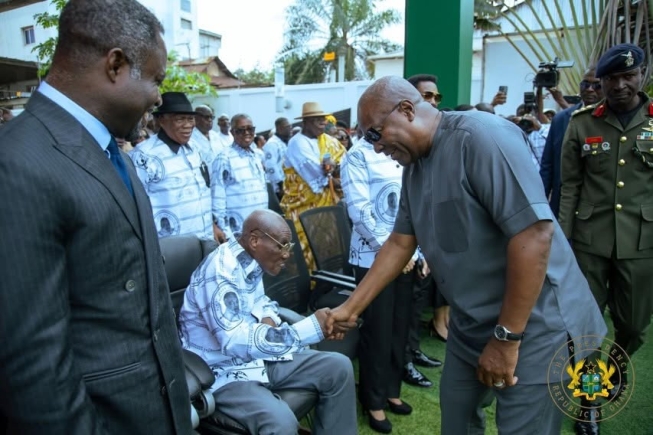
Mr. Tsatsu Tsikata, Mr. Kofi Totobi Quakyi, and Dr. Akwasi Opong-Fosu gave the occasion a deeper historical texture. These were not casual observers of the Rawlings era. They are figures whose public lives intersected with the struggles, debates, transitions, tensions, and achievements that shaped the journey from revolution to constitutional rule. Their presence and reflections helped remind the party that Rawlings’ legacy cannot be reduced to one man’s charisma. It is a legacy embedded in institutions, comradeship, sacrifice, political education, ideological contestation, and the difficult labour of state-building.
Mr. Tsatsu Tsikata’s warning that the NDC must never become complacent in office, but must constantly prove its relevance and value to the Ghanaian people, deserves particular attention. It is a statement that goes to the heart of the Rawlings tradition. The NDC was not founded to enjoy power for its own sake. It was not founded to become comfortable in office. It was not founded to take the people for granted. It was founded to give political expression to the needs, frustrations, aspirations, and dignity of ordinary Ghanaians. Whenever the party forgets this, it weakens the very moral claim upon which its legitimacy rests.






-
-
-
-
-
-
-
Show Comments[4077]Pedangtogel | Login Resmi Link Alternatif Situs Slot Gacor Hari Ini,Pedangtogel menyediakan akses link alternatif terbaru untuk daftar judi online via dana dengan mudah. Temukan cara main togel online yang simpel dan segera bergabung. visit: pedangtogel
A solid choice for anyone who loves the casino atmosphere online. The live dealers are professional and the atmosphere is exciting. Join phbetpkcasino today.
Such an exciting place to play! I love the thrill of the jackpots and the community vibe is great. My go-to site is ca777game
The atmosphere of this casino is top notch. It really feels like a premium experience from the moment you sign up. Visit parkjilicasino today.
If you are looking for a variety of slots, jiliibet is where it’s at. I love how they keep updating the game library. It keeps things fresh and exciting every time I log in.
Really loving the experience here so far. The customer support is actually helpful and the bonuses are quite generous. It feels very reliable. Try em777login
[4030]77bet login করুন এবং বিকাশ দিয়ে ক্যাসিনো ডিপোজিট করুন,77bet app download করে অনলাইন স্লট গেম খেলার নিয়ম জানুন এবং সেরা লাইভ ক্যাসিনো বোনাস লুফে নিন। আজই জয়েন করে গেম খেলা শুরু করুন। visit: 77bet